Netflix Fear Street: Prom Queen
Netflix Fear Street: Prom Queen
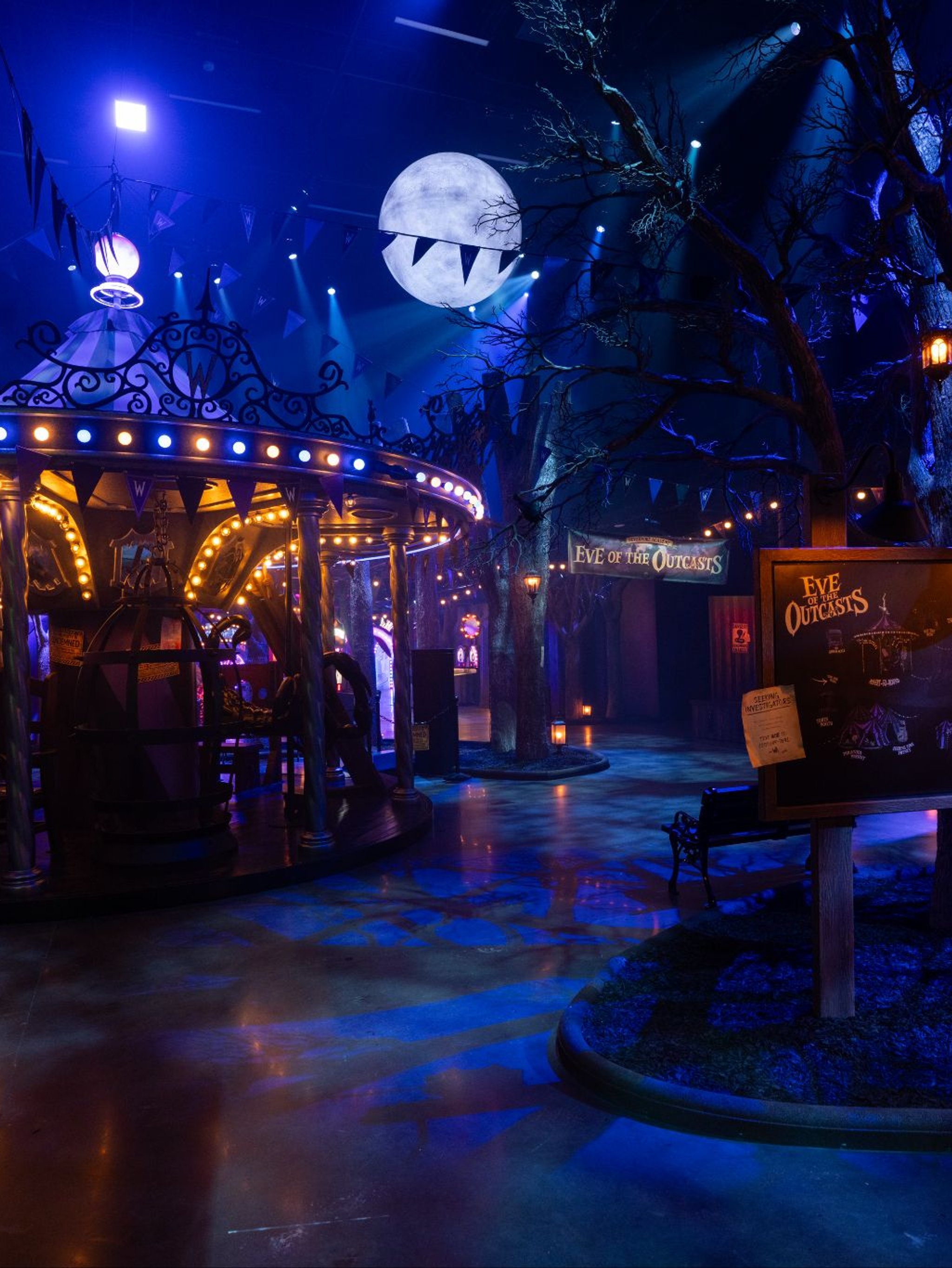
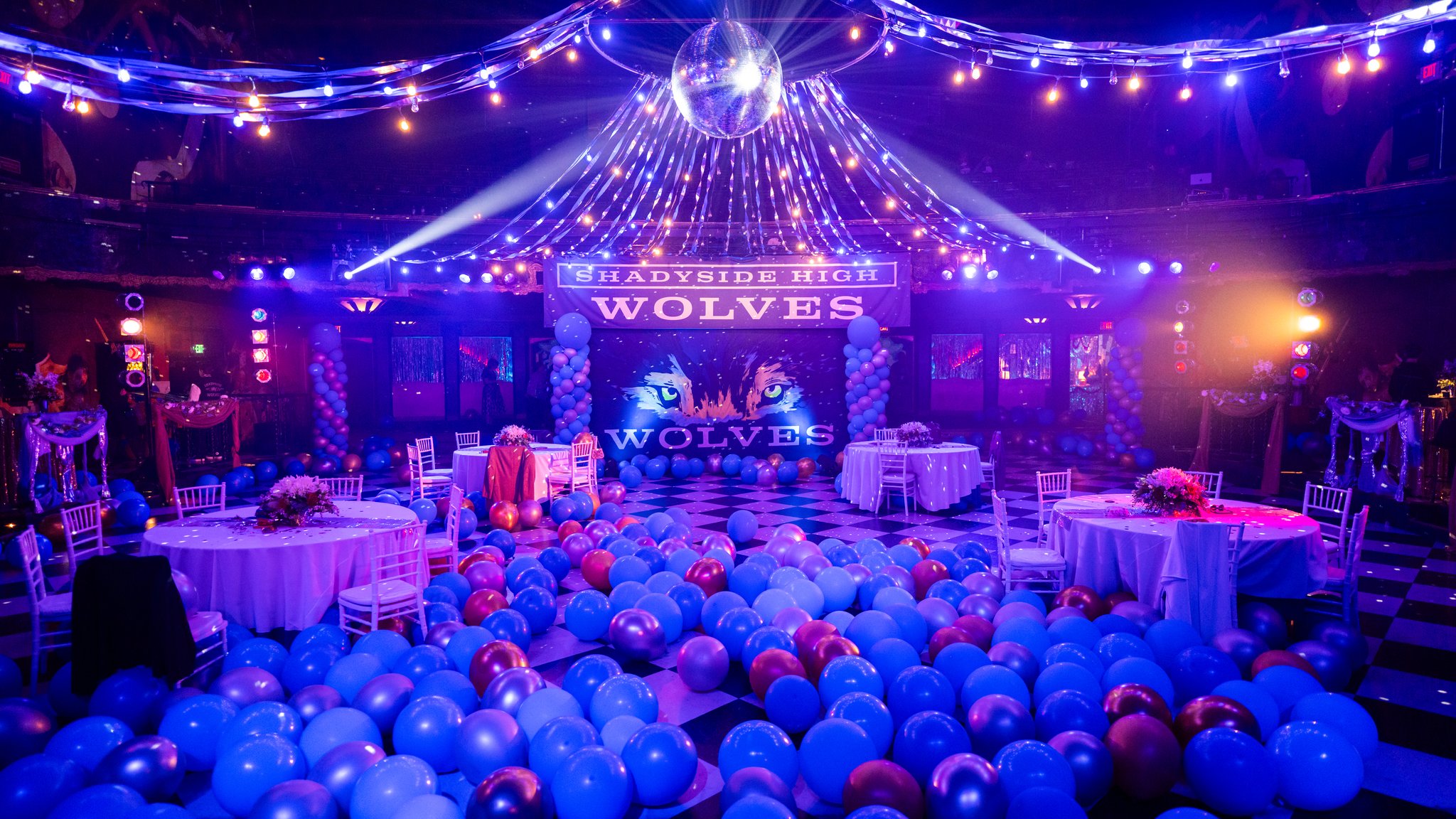
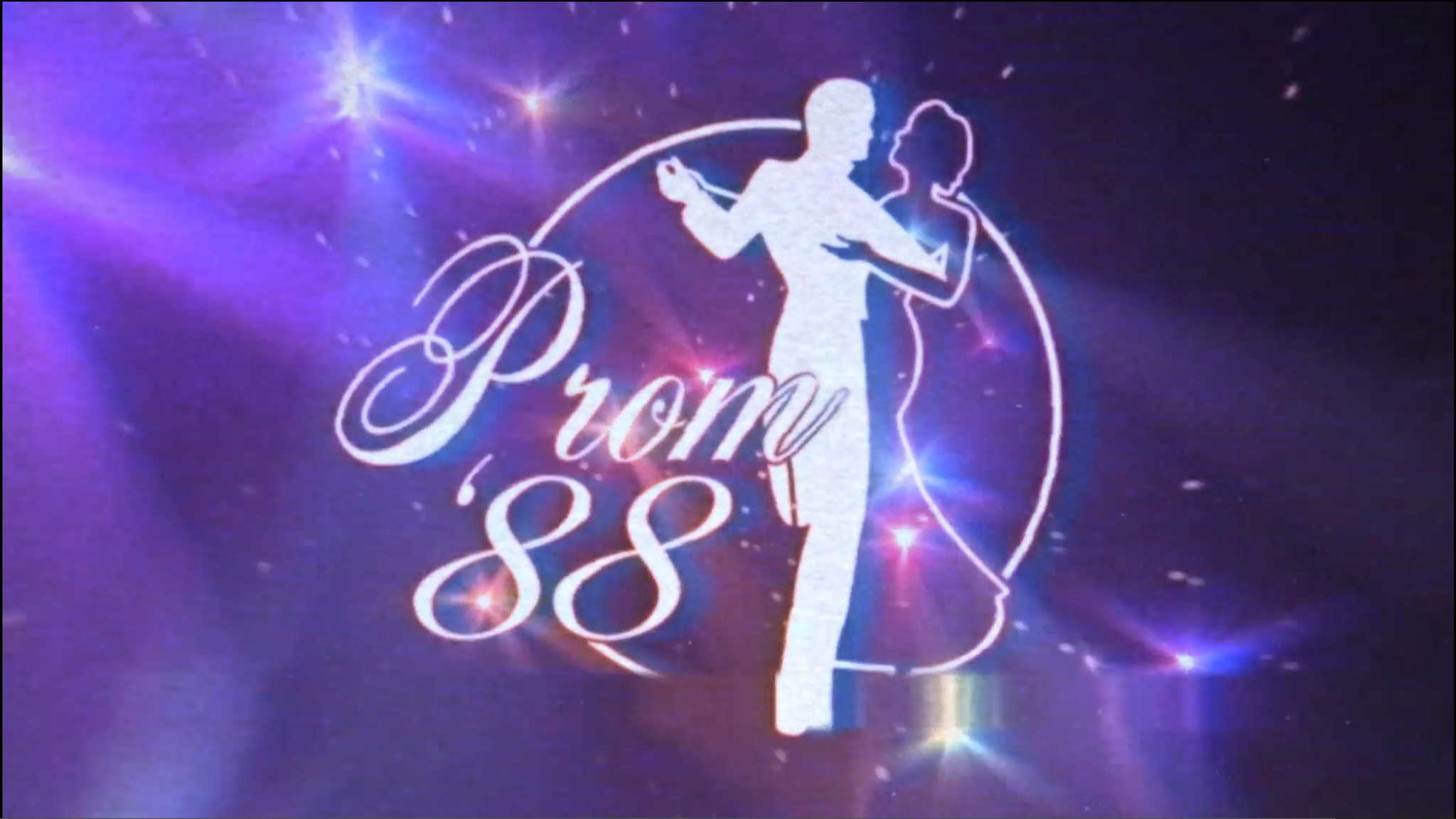
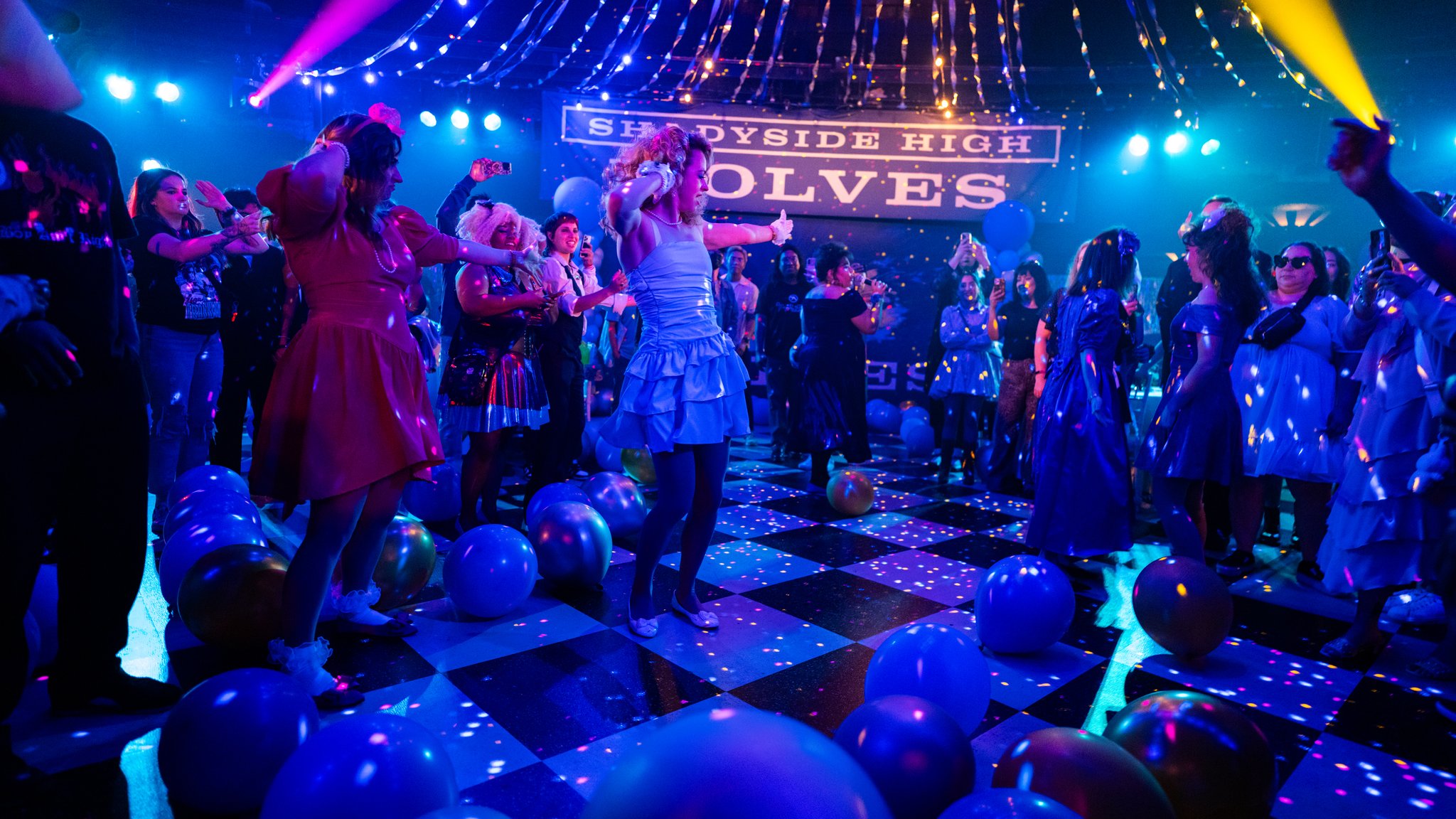
Immersive Prom Experience4022 We transformed the Fonda Theatre into Shadyside High for a fully explorable, 1980s prom-night experience—part teen drama, part murder mystery, part slasher film.
Scope
- Lighting Design
- Narrative & Strategy
- Visual Content Design
- Audio / Visual Production
- Custom Fabrication
- Experiential Design
- Design
- Live Action Shoot
- Creative Direction
- Spatial Design
- Creative Technology
- Project Management
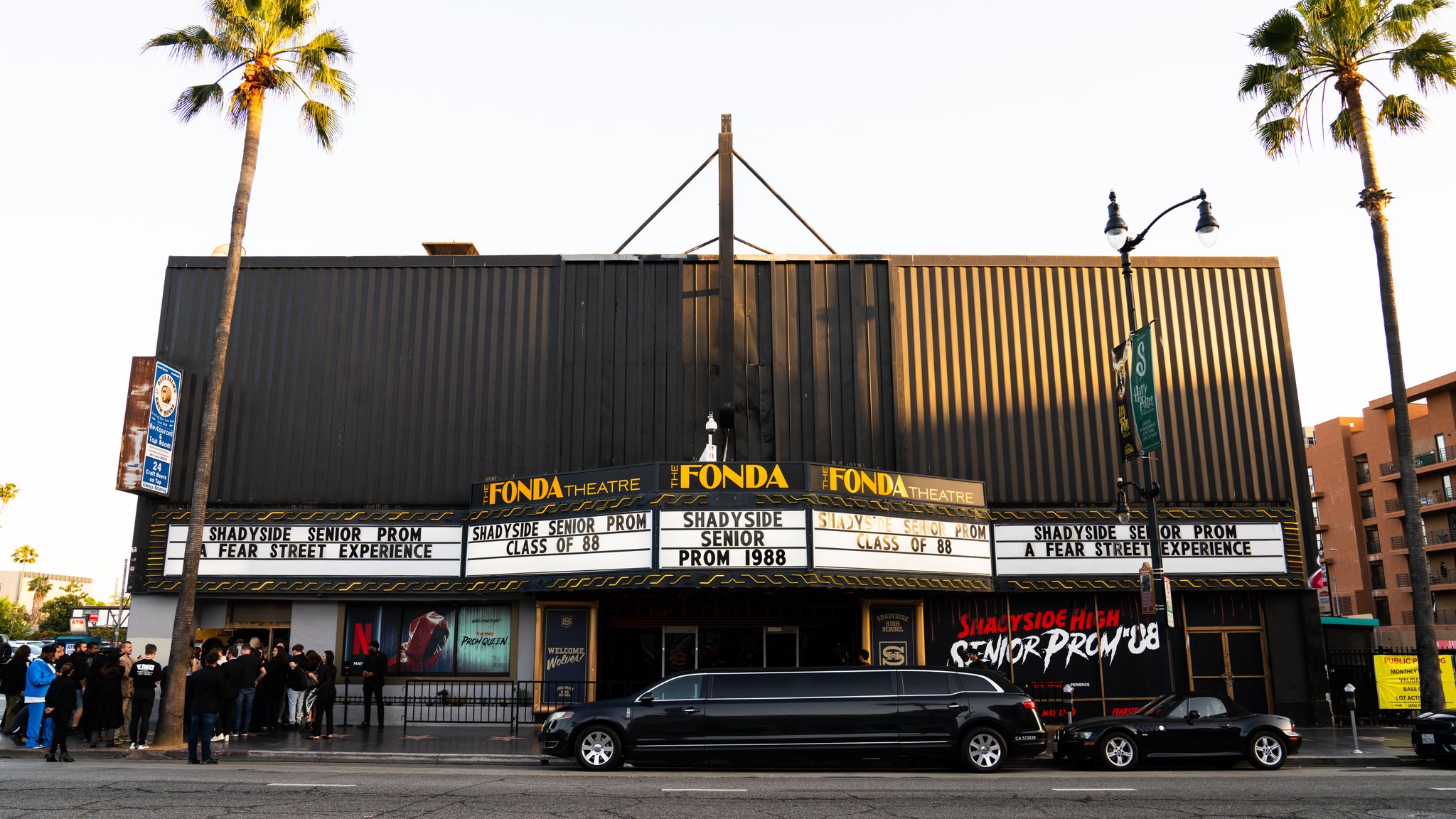
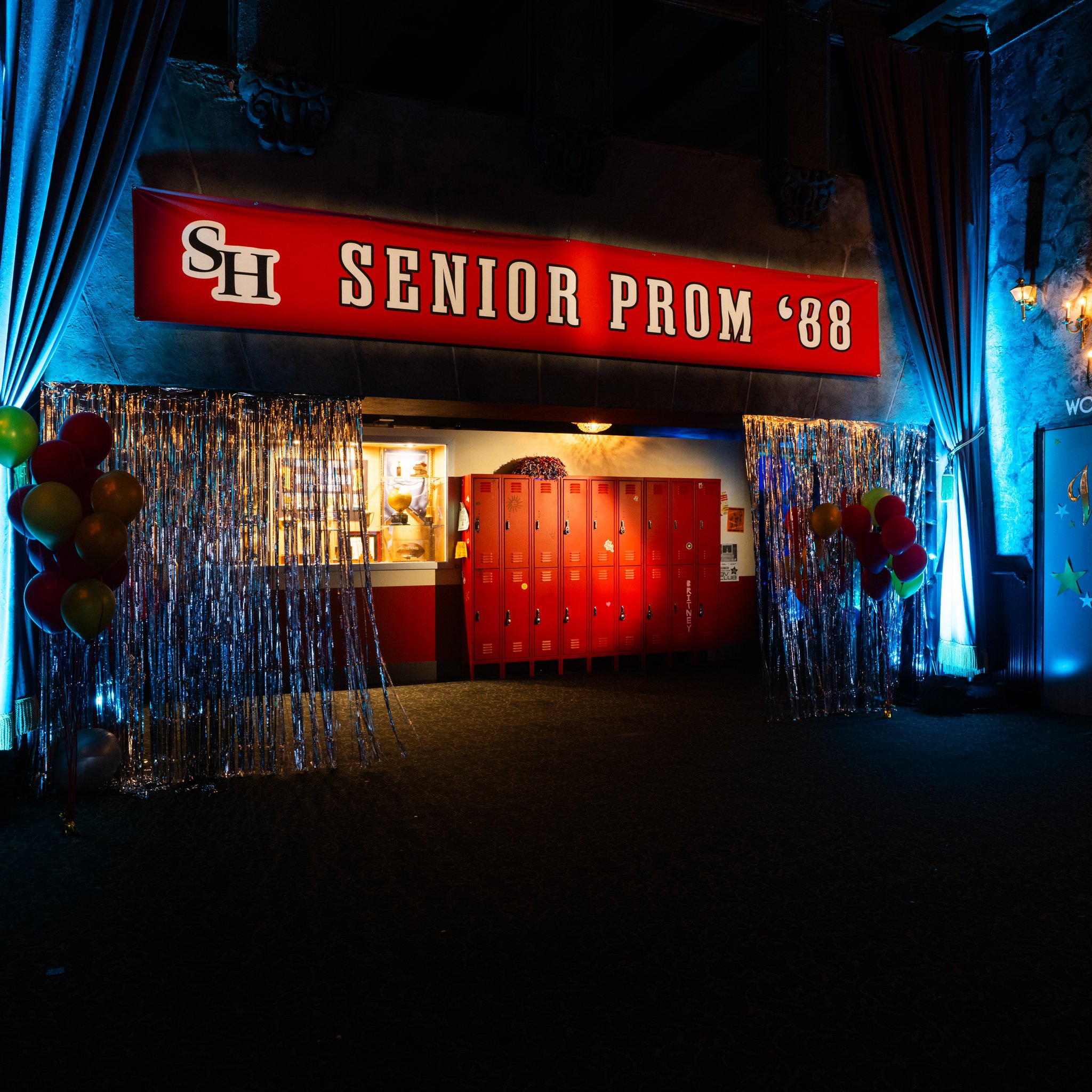
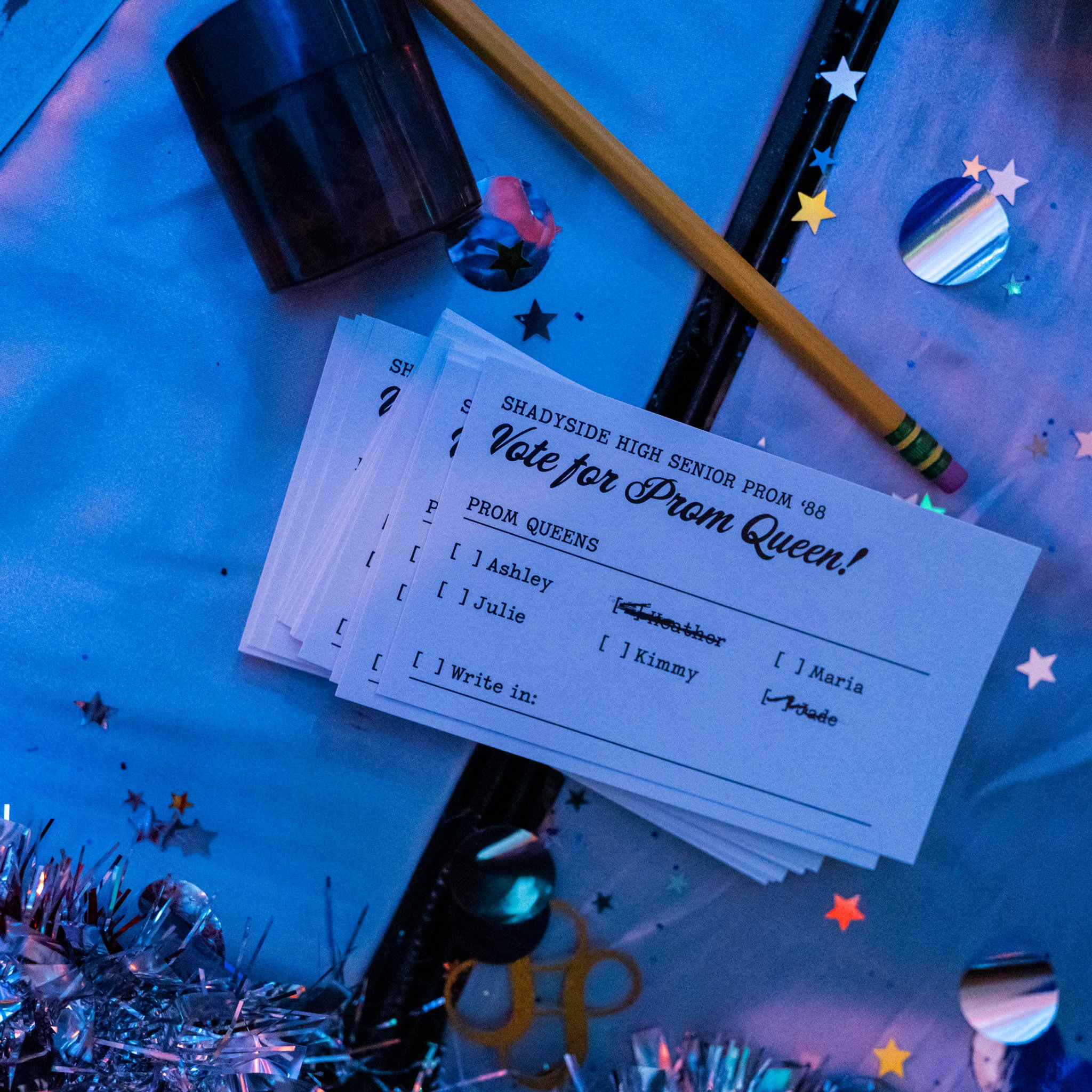
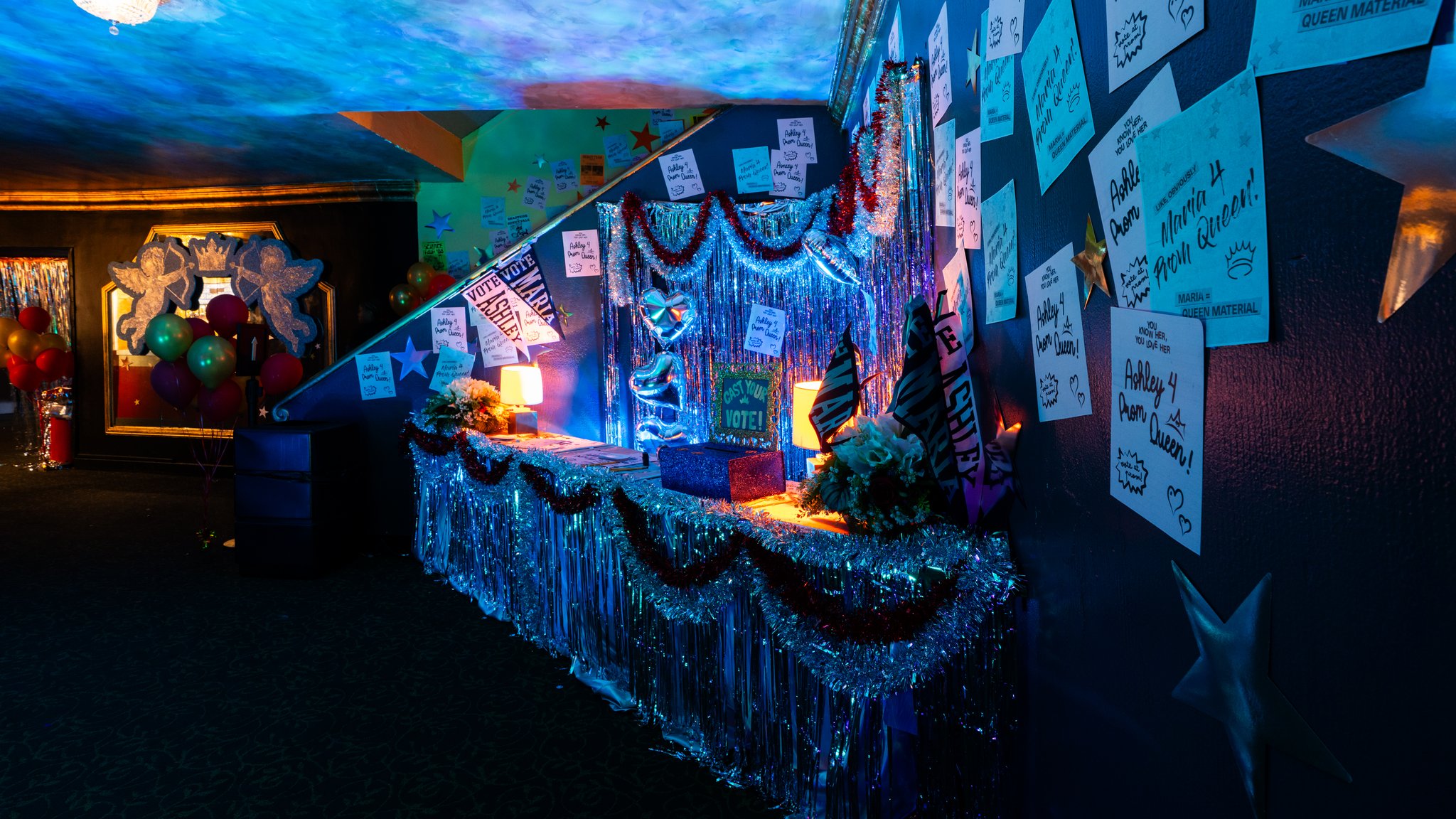
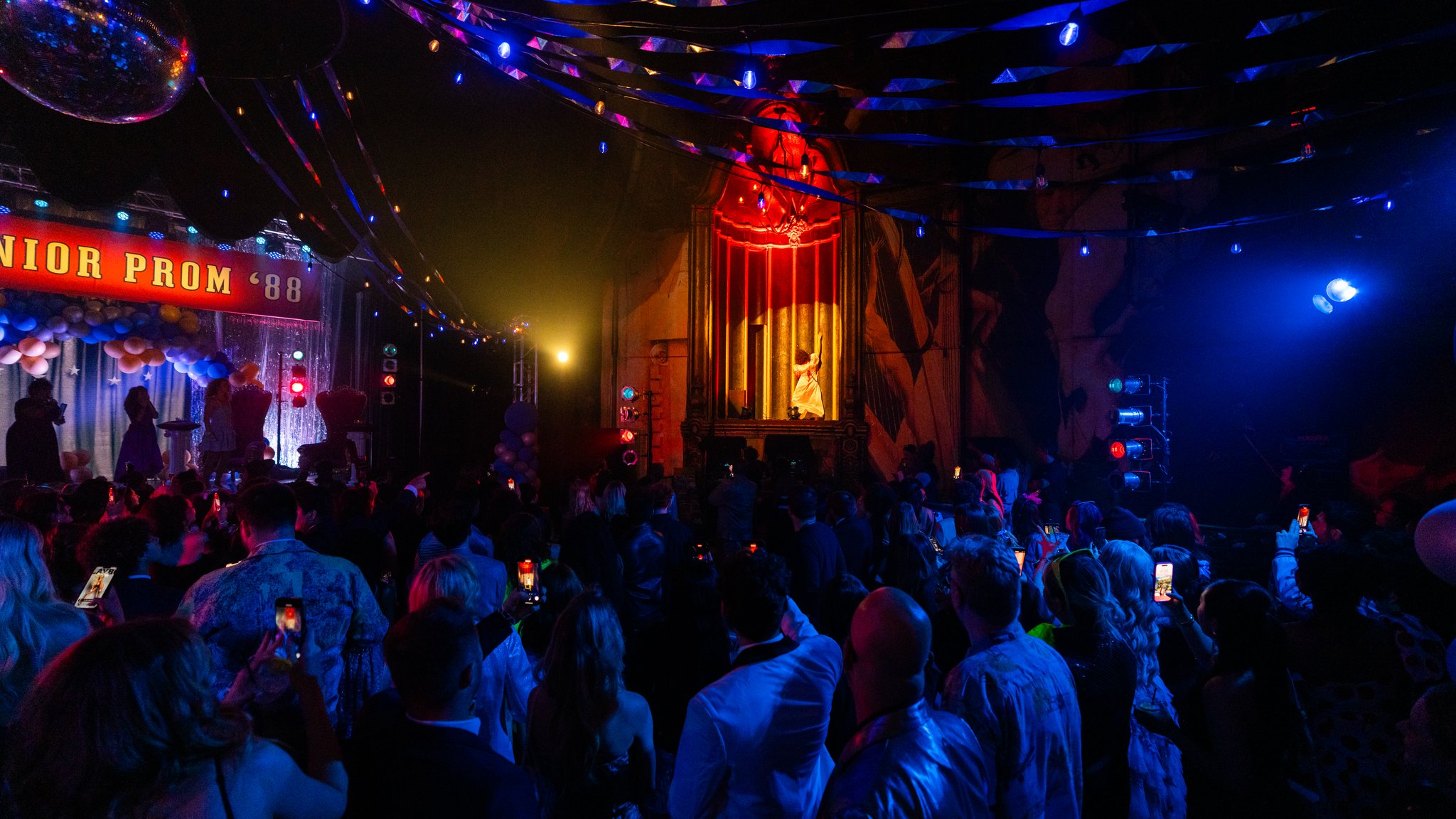
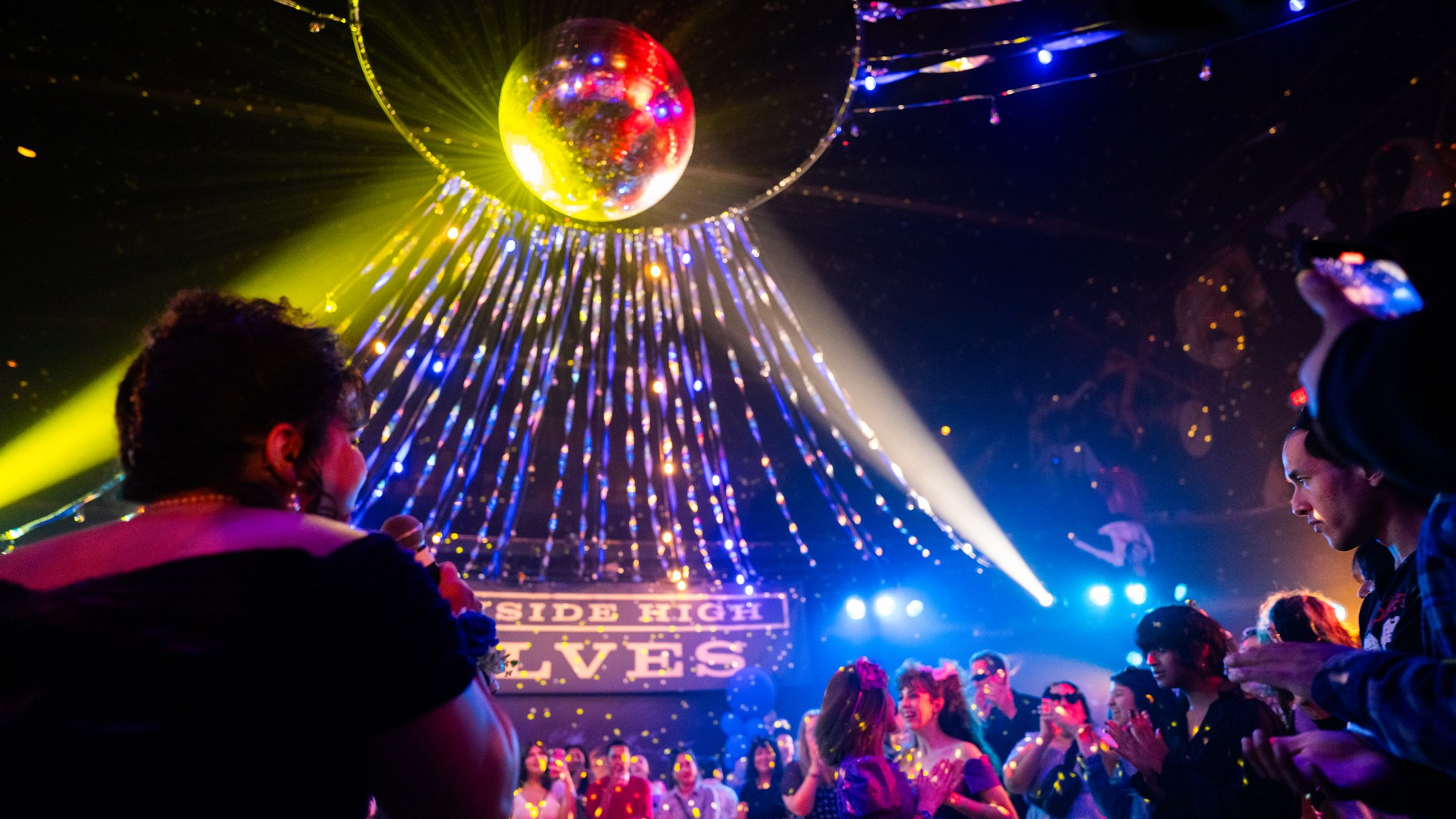
Instead of building a single “main room,” we treated the venue like a real campus. Guests entered through locker-lined hallways and moved into a gymnasium-style prom ballroom with stage and balloon arch. Upstairs, the mezzanine became an AV lab overlooking the dance floor. Other areas shifted into a library, teacher’s lounge, and a rooftop football-field moment with bleachers. Every space was dressed to hold up at close range so people could roam, linger, and find details without the illusion falling apart.
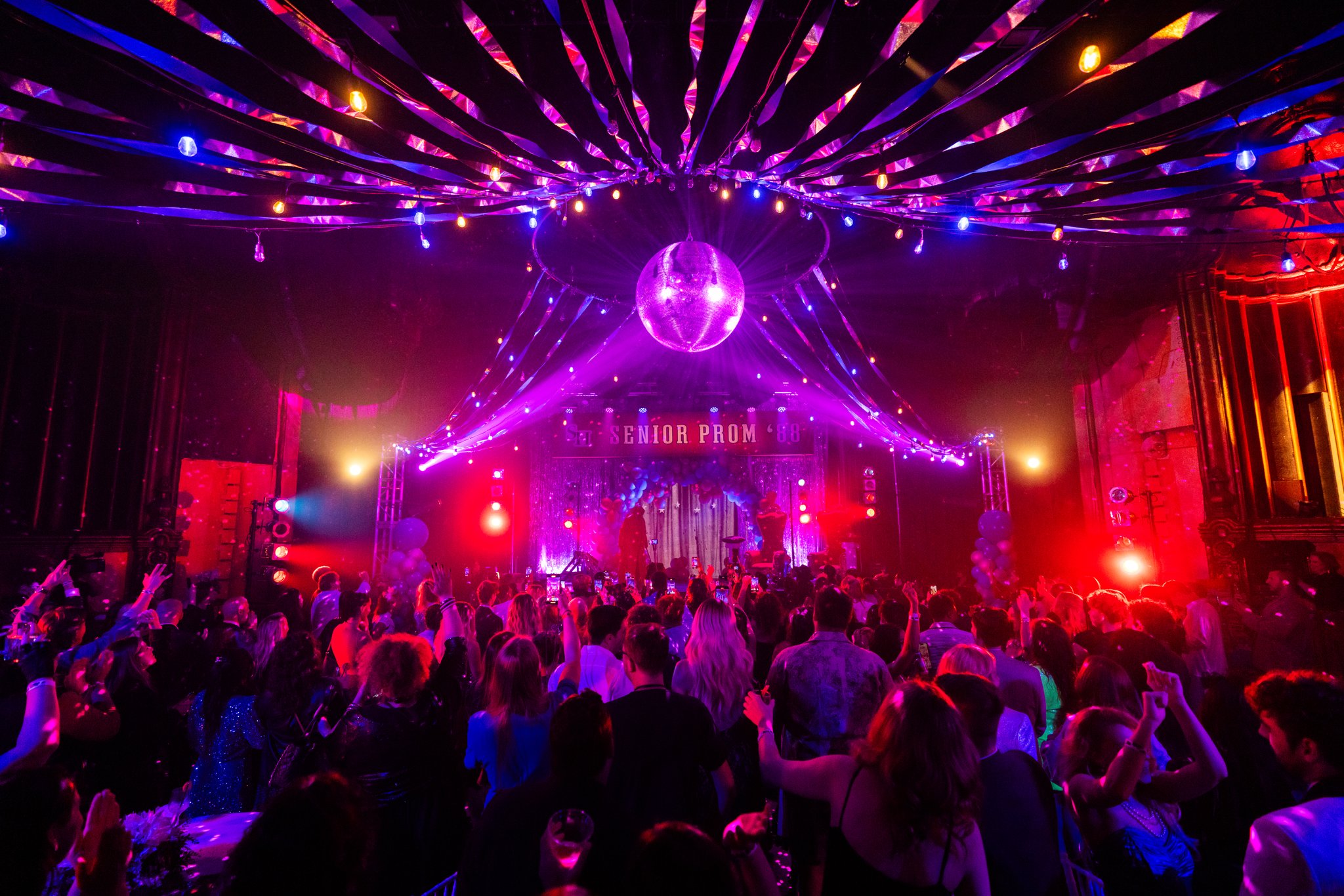
The format was intentionally open-world. Guests weren’t pushed through a line—they could wander, follow characters, and decide how deep they wanted to go into the Fear Street lore. We collaborated with Secret Cinema on casting and narrative structure, while we led the build, experience design, and interactive systems that made the night feel alive. Actors weren’t just performing; they were pulling guests into conversations, building alliances, and steering small groups toward story beats without it feeling forced.
Then the prom started to go sideways.
Then the prom started to go sideways.
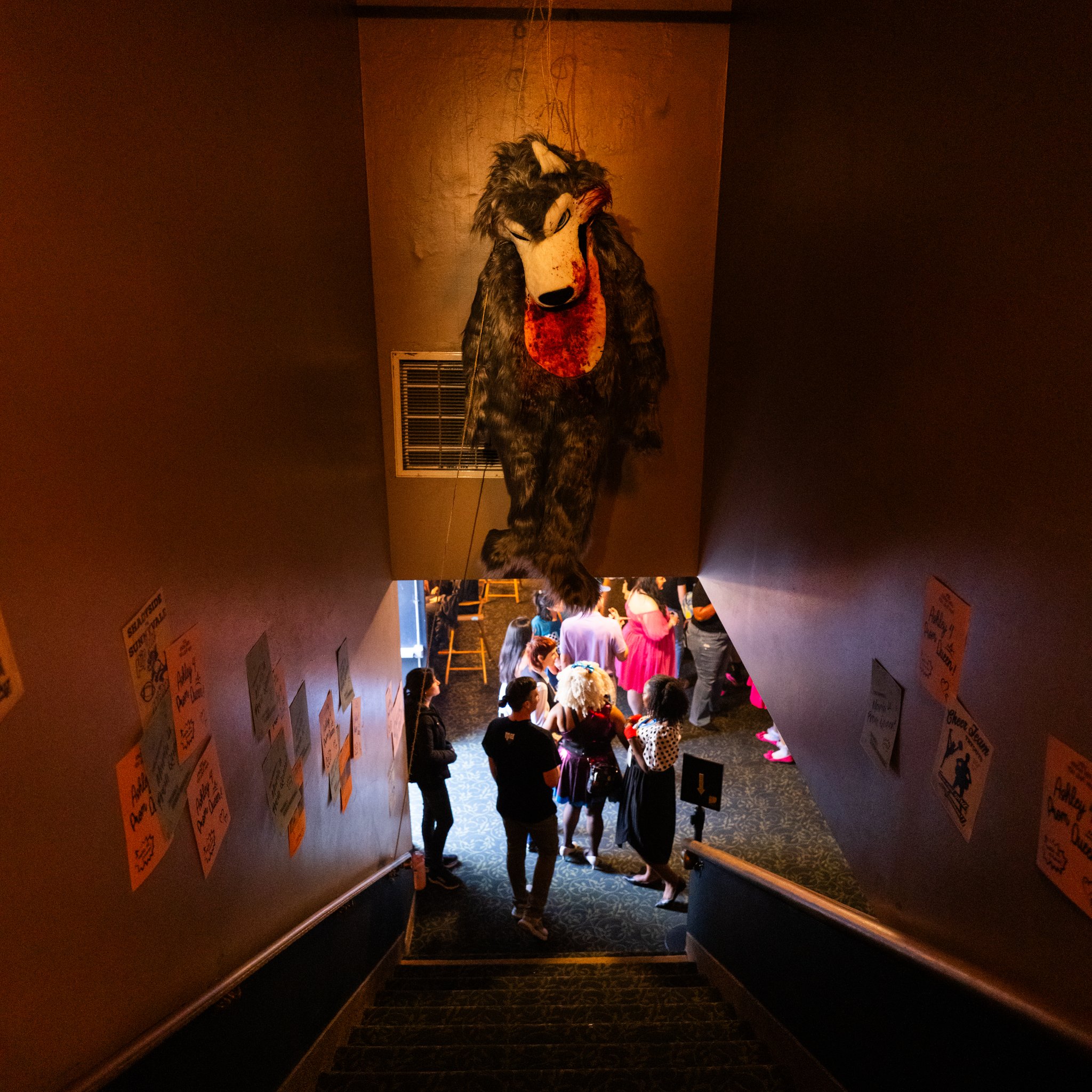
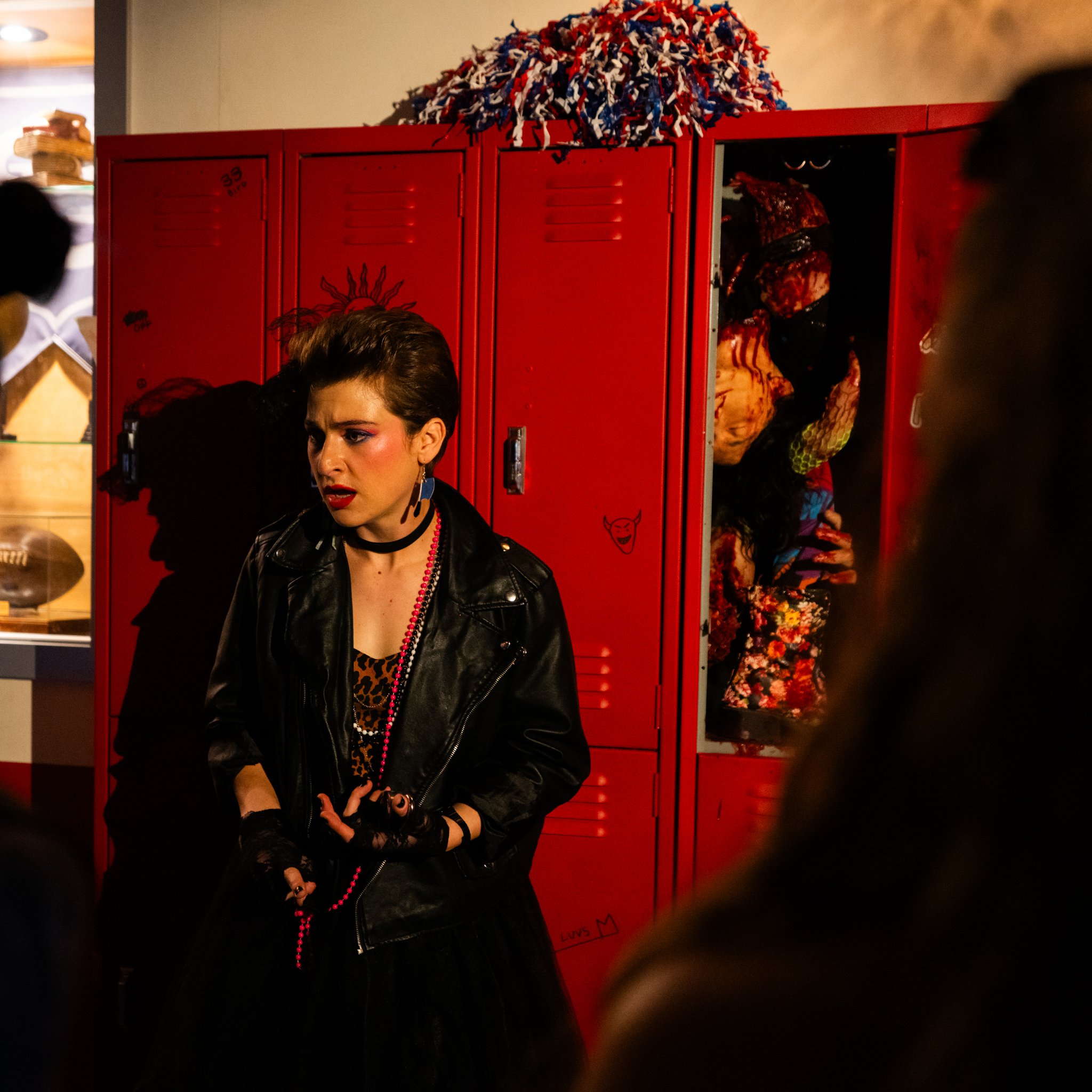
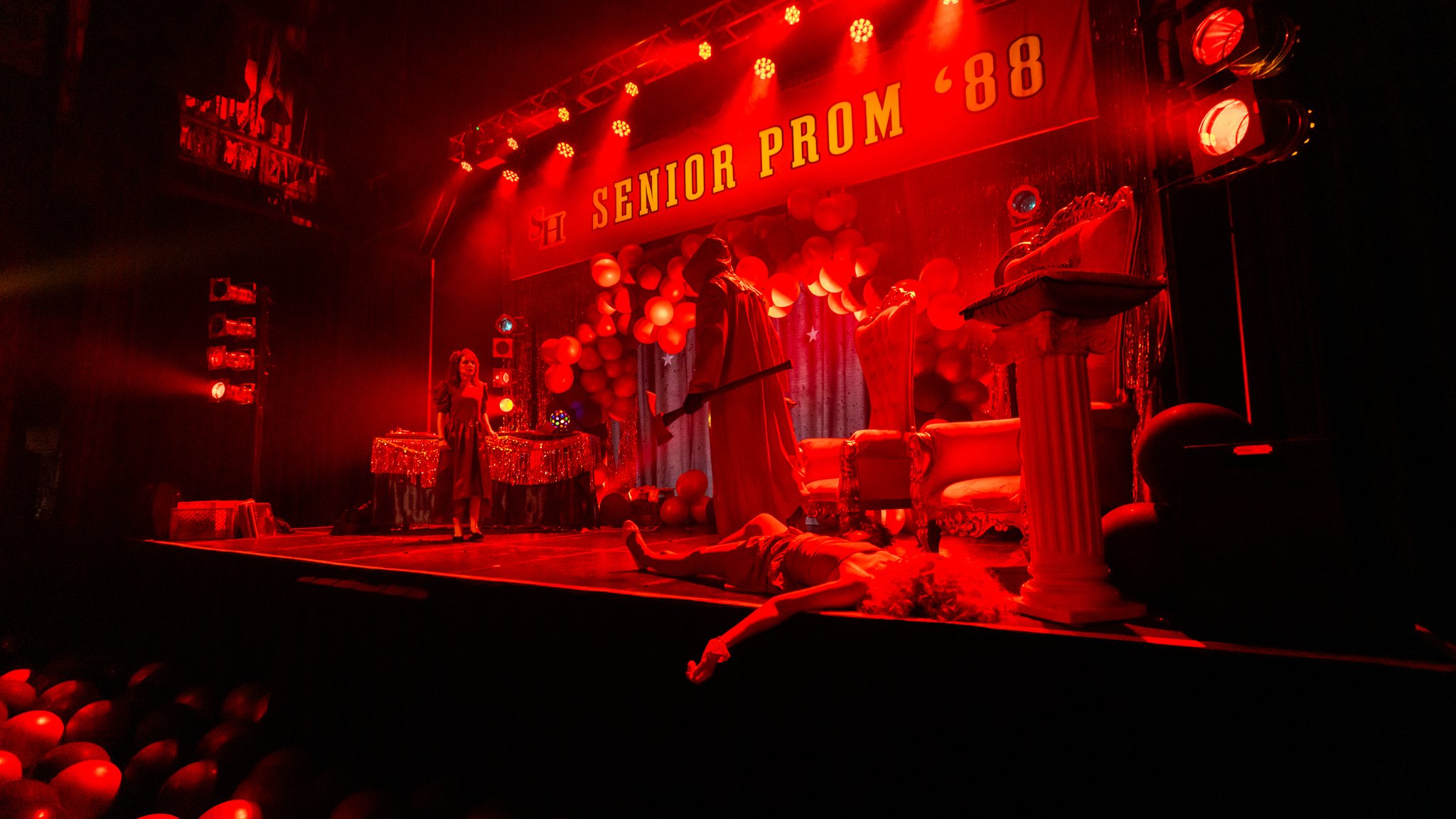
We designed a sequence of repeatable “horror interruptions” that could land multiple times throughout the night: a body discovered in a locker; a second locker guests could open that triggered a practical slash effect; a janitor’s closet scene built with prosthetics and film-style makeup; a stairwell reveal featuring the school mascot, Wolfie; an AV lab moment where Eugene pulled guests into the mystery before the story took a hard turn. In the library, the Red Coat appeared and chased groups through the stacks—one of the most kinetic beats of the experience.
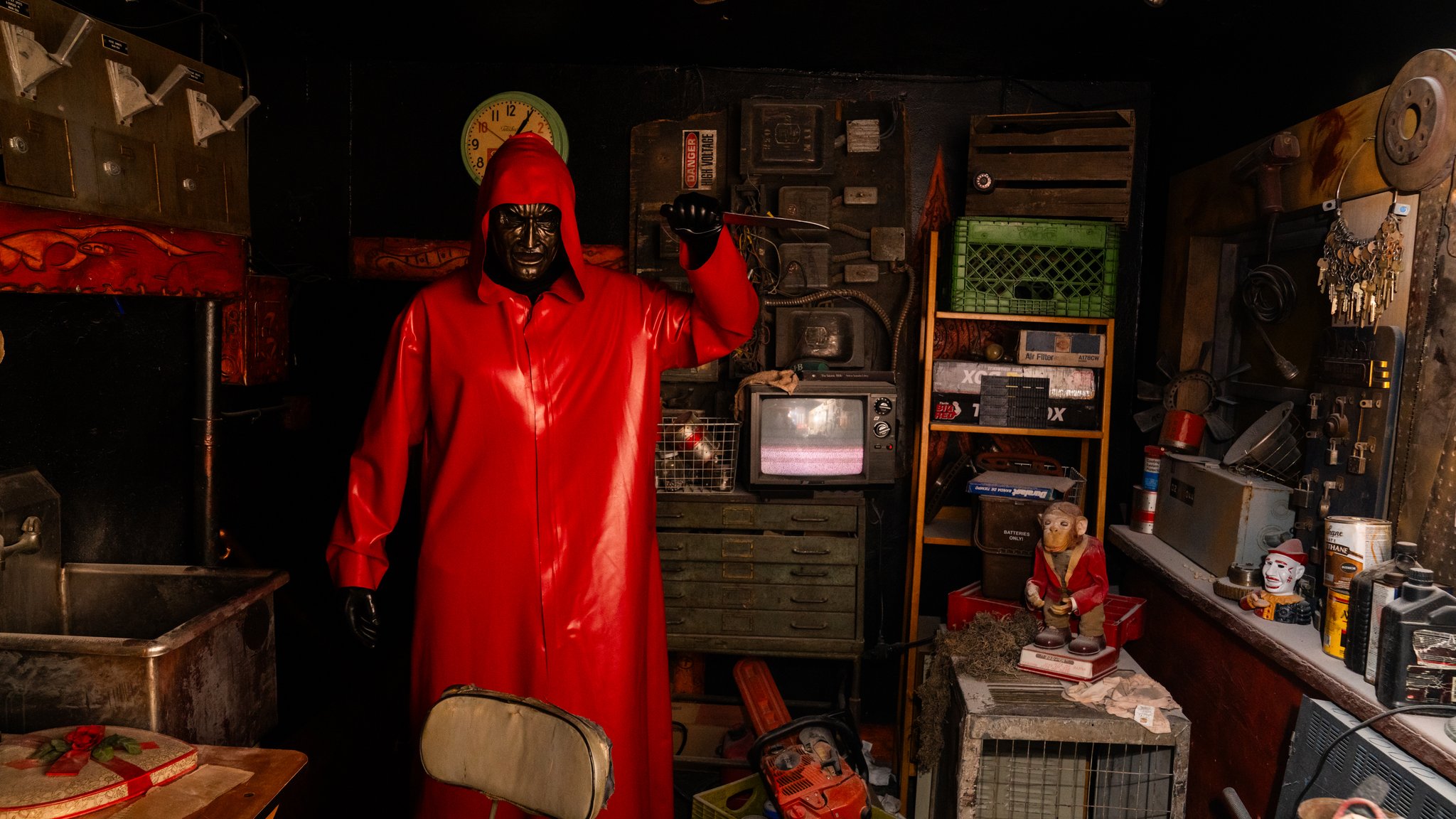
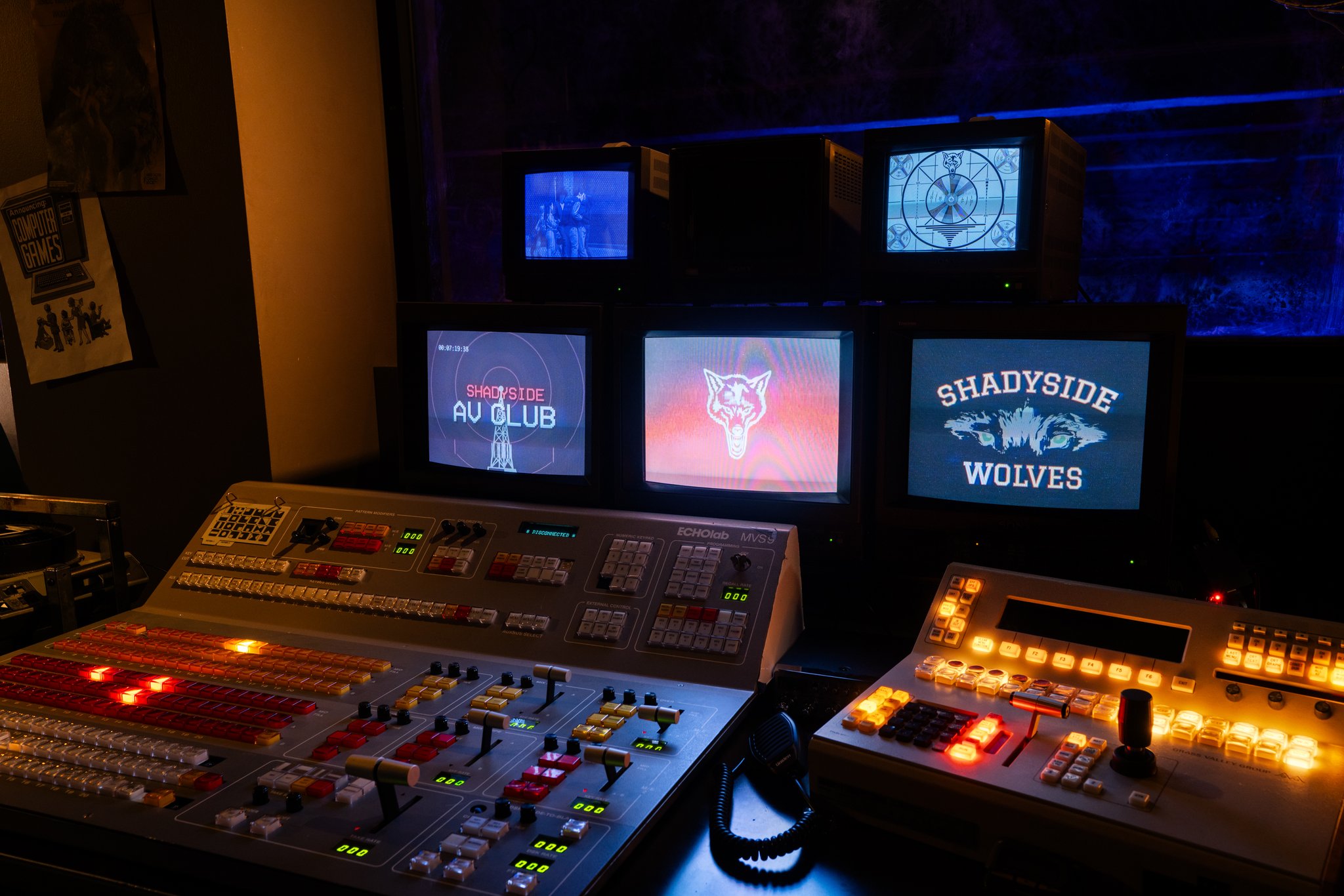
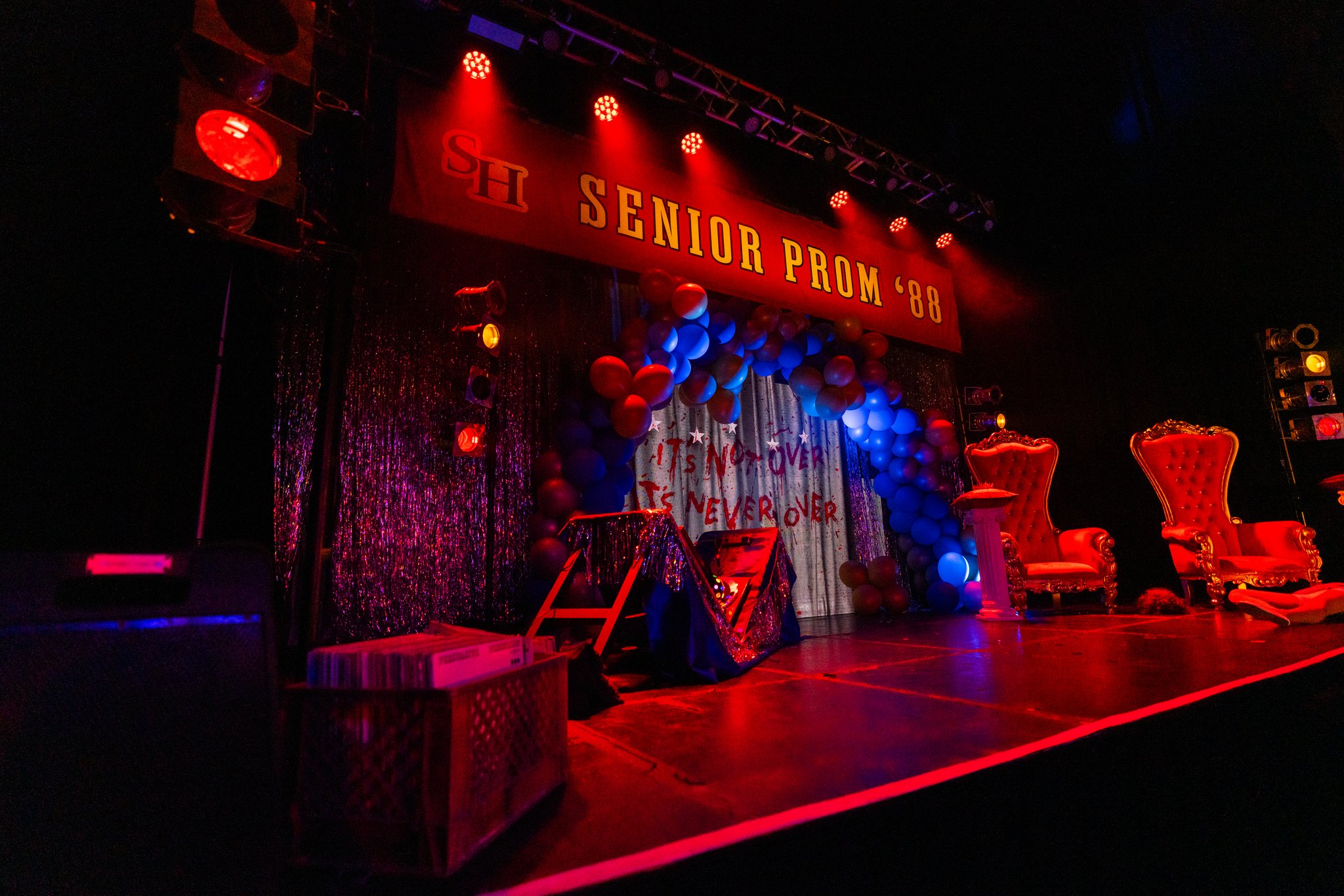
On the technical side, we built show mechanics that could reset quickly and run cleanly. A favorite example was a shadow-based decapitation effect: we hid an LED wall behind the balloon arch and matched it to the curtain backdrop so the silhouette played convincingly, followed by a practical prop head that rolled onto the stage. Big reaction, fast reset, repeatable all night.
We also integrated digital takeaways that doubled as story punctuation. Guests could capture a photo in the teacher’s lounge with the Red Coat lurking behind them, trigger a library video capture that recorded real reactions during the chase, and experience a janitor’s closet capture that replayed their responses. These weren’t just souvenirs—they gave people a reason to commit to the moment and share the night afterward.
We also integrated digital takeaways that doubled as story punctuation. Guests could capture a photo in the teacher’s lounge with the Red Coat lurking behind them, trigger a library video capture that recorded real reactions during the chase, and experience a janitor’s closet capture that replayed their responses. These weren’t just souvenirs—they gave people a reason to commit to the moment and share the night afterward.
The entire project moved fast—from early creative through build and opening in just over six weeks—while still requiring a full venue transformation, cast integration, practical effects, and reliable show automation.
Why it mattered: Fear Street fans know the lore, and they want more than a backdrop. This experience gave them a night that felt like stepping into the franchise—prom, panic, and all—while still being fun and legible for guests who were just there for a good time. People didn’t leave saying they “went to an activation.” They left arguing theories, picking favorites, and replaying the moments they triggered (or regretfully did). It was one of those projects that reminded us how powerful immersive storytelling becomes when every detail—space, cast, tech, and atmosphere—works together.
Why it mattered: Fear Street fans know the lore, and they want more than a backdrop. This experience gave them a night that felt like stepping into the franchise—prom, panic, and all—while still being fun and legible for guests who were just there for a good time. People didn’t leave saying they “went to an activation.” They left arguing theories, picking favorites, and replaying the moments they triggered (or regretfully did). It was one of those projects that reminded us how powerful immersive storytelling becomes when every detail—space, cast, tech, and atmosphere—works together.
Credits
Acronym
- Executive ProducerJessica DeVirgilis
- Sr. Technical ProducerNico Yernazian
- ProducerBen Rodenmeyer
- Sr. Creative ProducerAndie Vallee
- Creative ProducerKatie Walker
- Creative DirectorLaura Suhok
- Sr. Designer, 3D/EnvironmentalMark Rakhmanov
- Art DirectorMikey Dorner
- Sr. Graphic DesignerSteven Tang
- Creative Producer, MediaAndrew Curtis
- Creative Producer, MediaAaron Marcellino
- EditorMike Hull
- Lighting DesignerGinevra Lombardo
- Director of Creative TechnologyColin Honigman
- Jr. ProgrammerJoey Furness
- Jr. ProgrammerReiley Nymeyer
- Jr. ProgrammerHaysie Chung
- Audio DesignerBrian Mayhall
- Audio DesignerPaul Groetzinger
- Set Dressing LeadErik Santiago
- Set DresserDon Cawley
- Set DresserHaley Bowman
- Motion DesignerAndrew Strelecki
- Jr. DesignerSiera Lang